How to Operate A Brushcutter
From pre-use checklists to basic operation techniques and storage tips, STIHL trimmers are known for their ability to cut weeds and overgrown grass, but they can do much more. With optional interchangeable cutting heads, you can turn your STIHL trimmer into a power brushcutting machine.
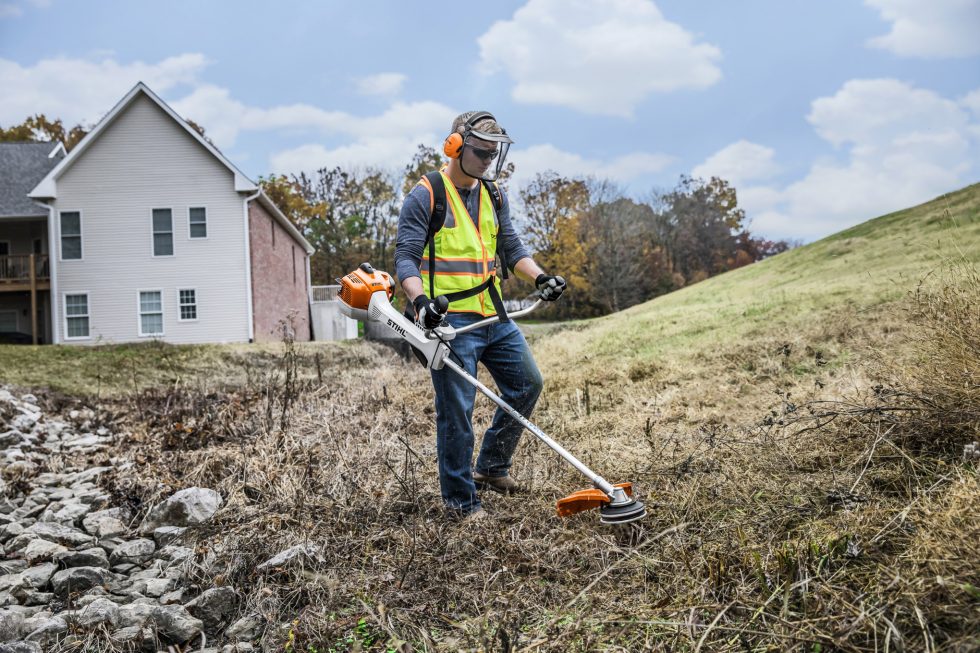
Pre-Use Checklist
- Switch off the engine completely and allow it to cool before refueling.
- Check working environment for any hazards.
- Keep a safe distance from other people (50 feet or more).
- Ensure attachments are mounted correctly and securely.
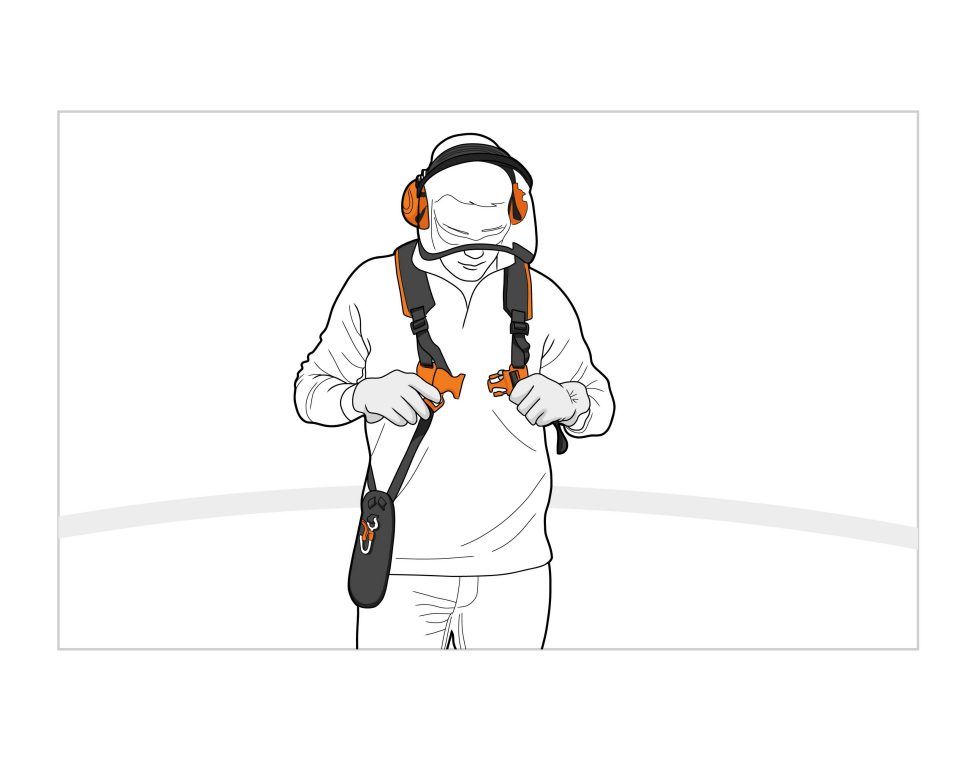
- Adjust the harness and handle(s) to suit your height.
Personal Protective Equipment Checklist
- Brush Shield – To help reduce the risk of injury to the head and face, wear a brush shield with built-in hearing protection.
- Hearing Protection – To help protect your hearing, wear sound barriers like ear plugs or ear muffs.
- Protective Glasses – Protective glasses should be worn under the brush shield as your primary defense against getting wood chips or other particulates in the eyes.
- Gloves – To help protect your hands, always wear heavy-duty work gloves made of leather or other wear-resistant material.
- Leg Protection – To help protect your legs, wear long pants made of heavy material.
- Protective Boots – To help maintain good footing, wear sturdy boots with nonslip soles. Steel-toe safety boots are recommended.
Brushcutter Starting Procedure
- Start in a well-ventilated area.
- Move at least 10 feet away from your fueling spot.
- Press the primer bulb at least 5 times (if unit has a primer bulb).
- Use choke if the engine is cold.
- Make sure you have secure footing.
- Ensure the cutting attachment is not touching anything.
- Start your brushcutter.
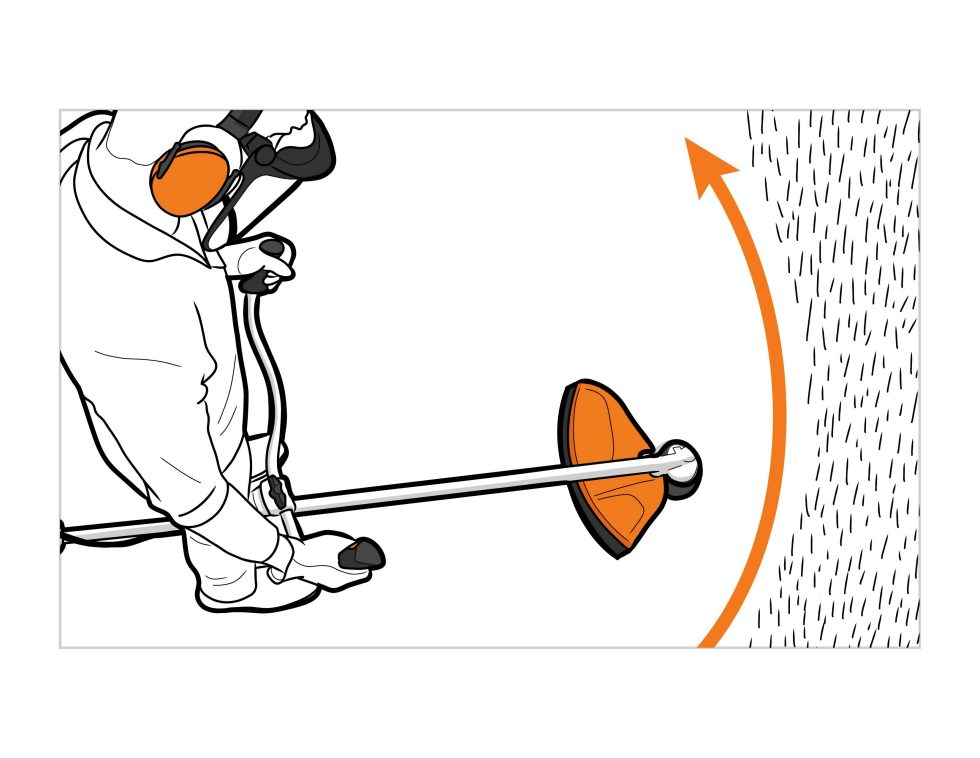
Basic Technique
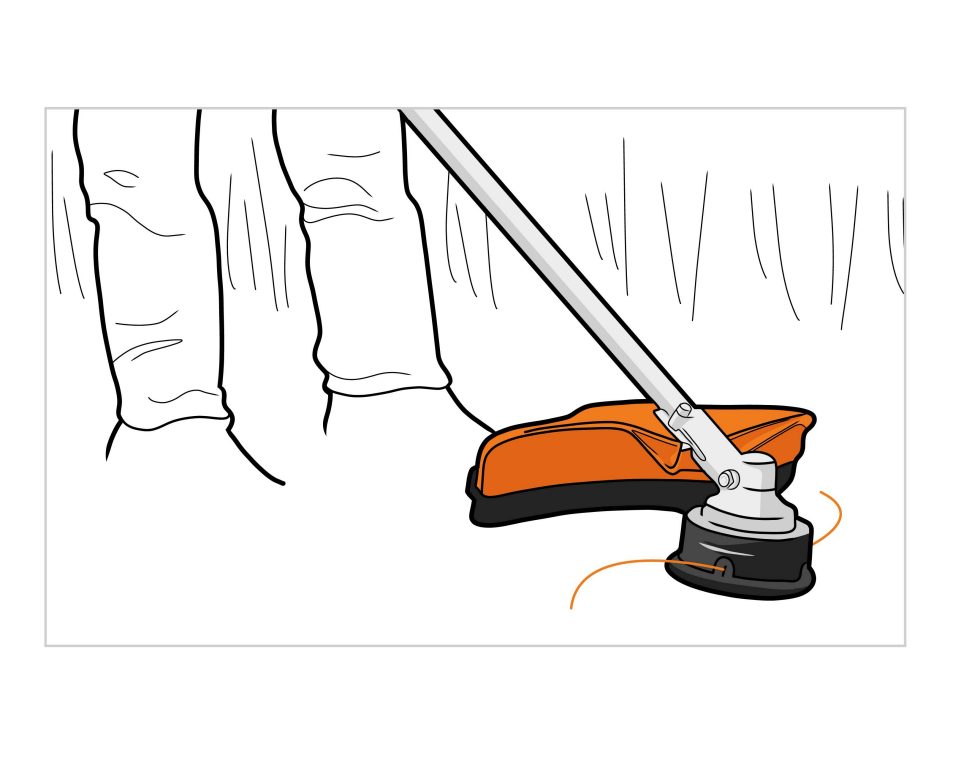
Because the cutting attachment rotates counter-clockwise, a right-to-left cutting motion is recommended. The advantage of this method is that the trimmings fall on the cut area.
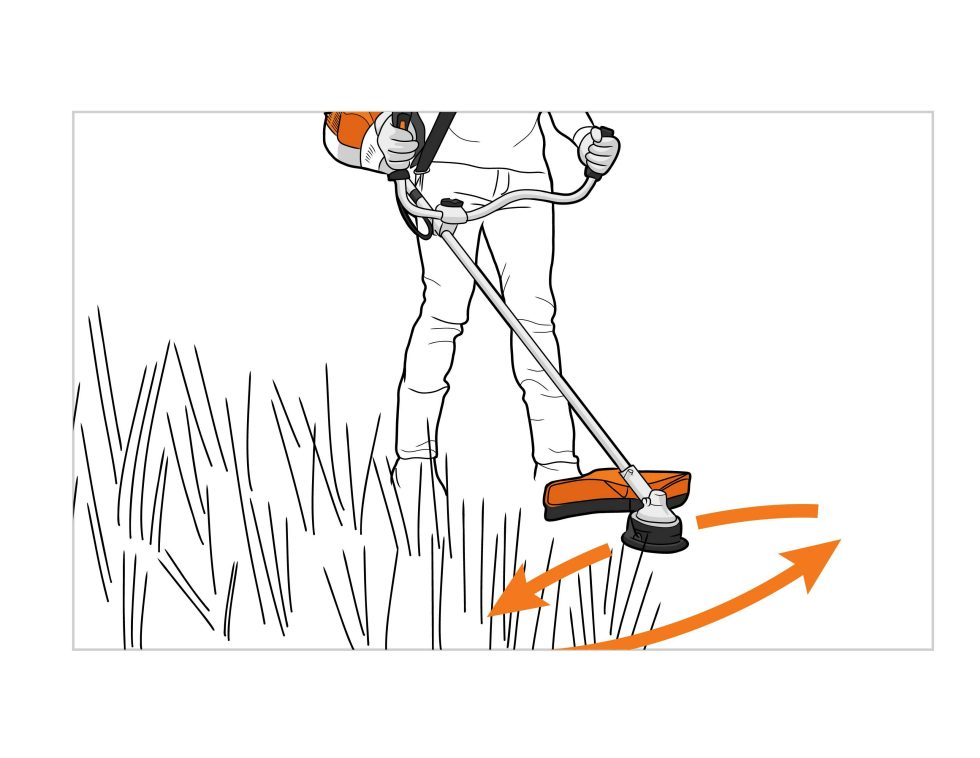
Trimming for Long Grass
When working in very long grass or tough weeds, two passes are recommended. An initial pass, right to left, cuts the top of the grass. Then, a lower pass, left to right, removes the remaining grass. The trimmings will discard to the left.
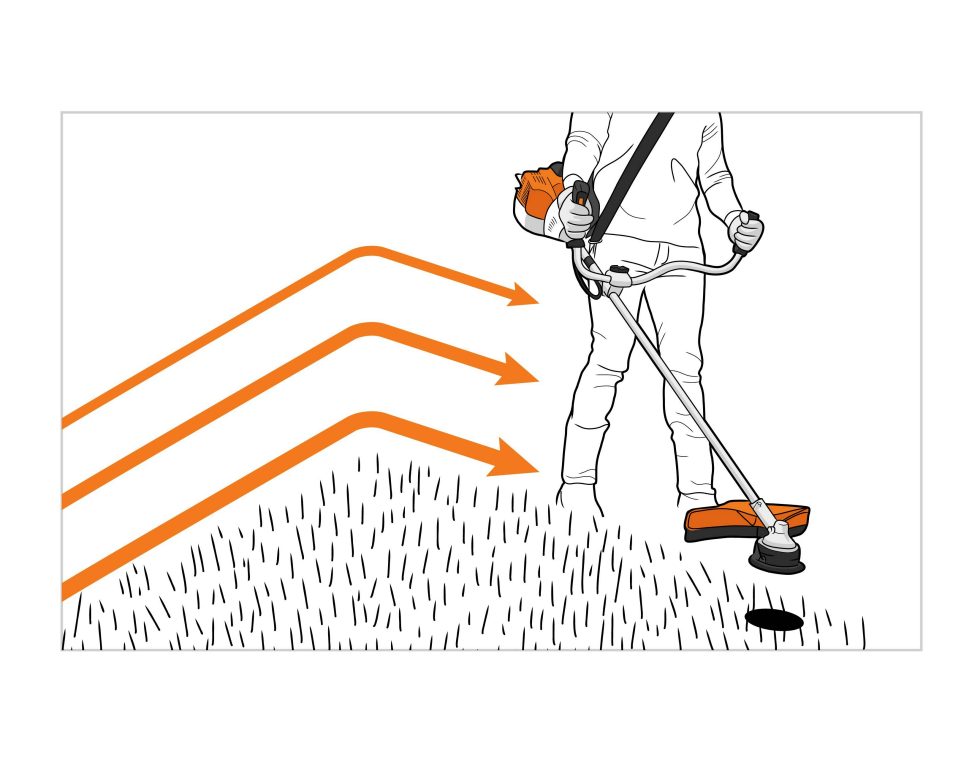
Mowing Large, Flat Areas
The best way to cut large areas is to use the square method. Divide the area to be mown into squares, and then work along the outsides toward the center.
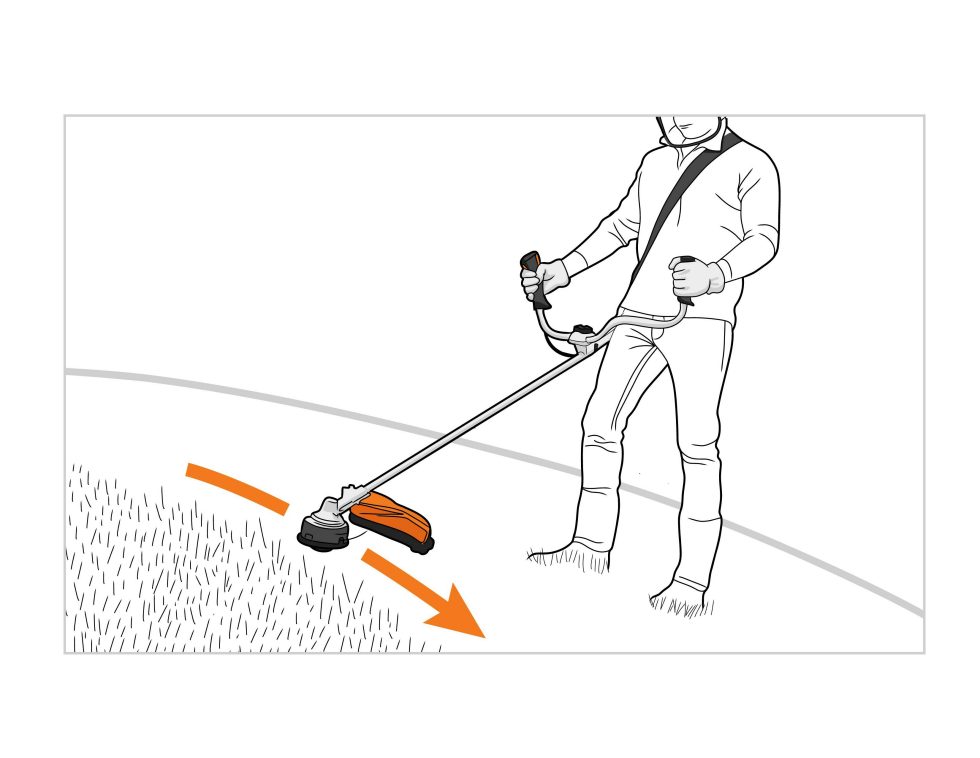
Mowing on a Hill – The Strip Method
The strip method is a good way to mow a slope. Cut a strip parallel to the slope, and then return along the swath. Then, cut the next strip above and repeat.
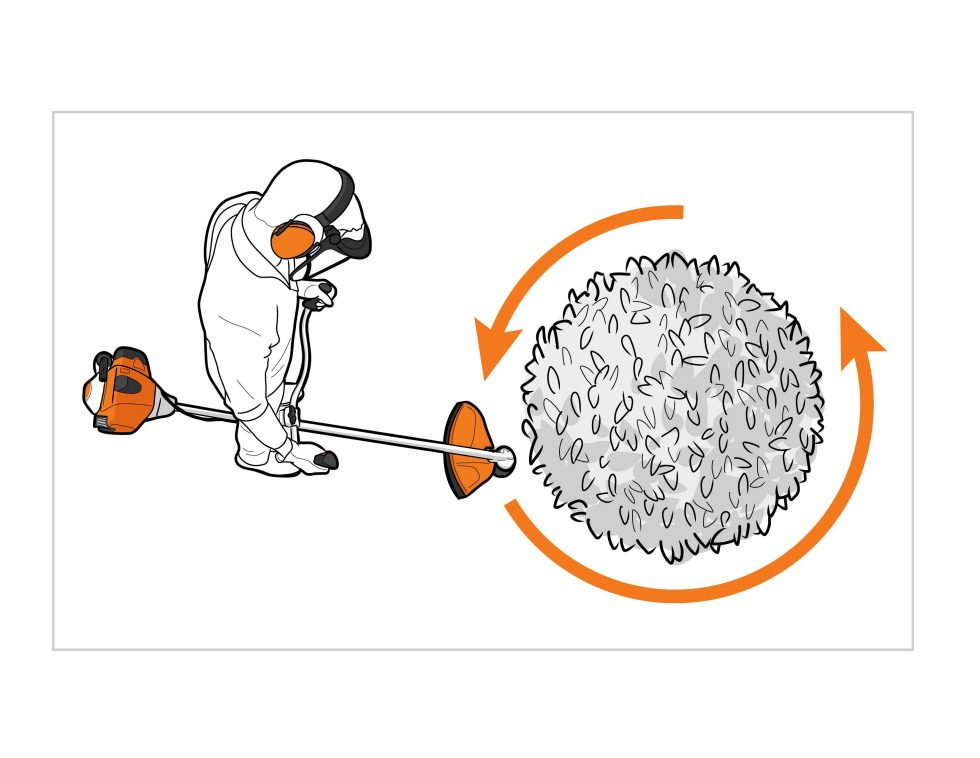
Trimming Around Obstacles
The “mowing line” created by the trimmer is the best way of navigating right up to trees or bushes without damaging them. If several plants are growing close together, try to clear around them before mowing. To do that, use the deflector on your brushcutter as a guide. Place the deflector up against the base of the tree or bush and use it to guide you as you move. That protects the trunk while mowing the area around it.
Holding Bike-Handle Brushcutters
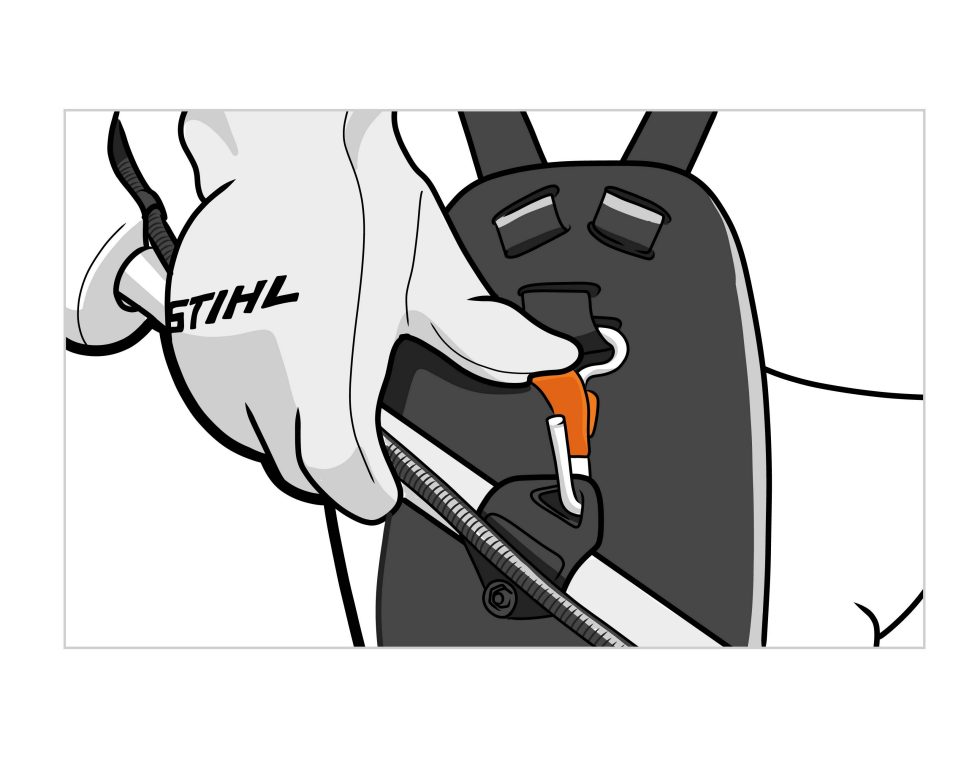
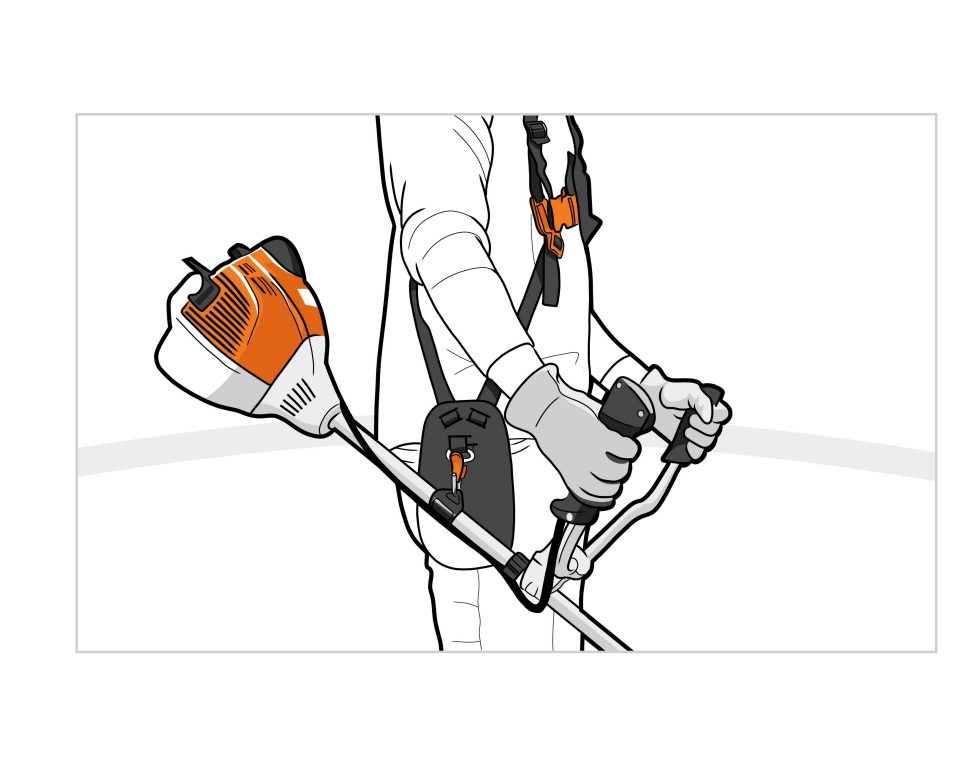
Holding Loop-Handle Trimmers
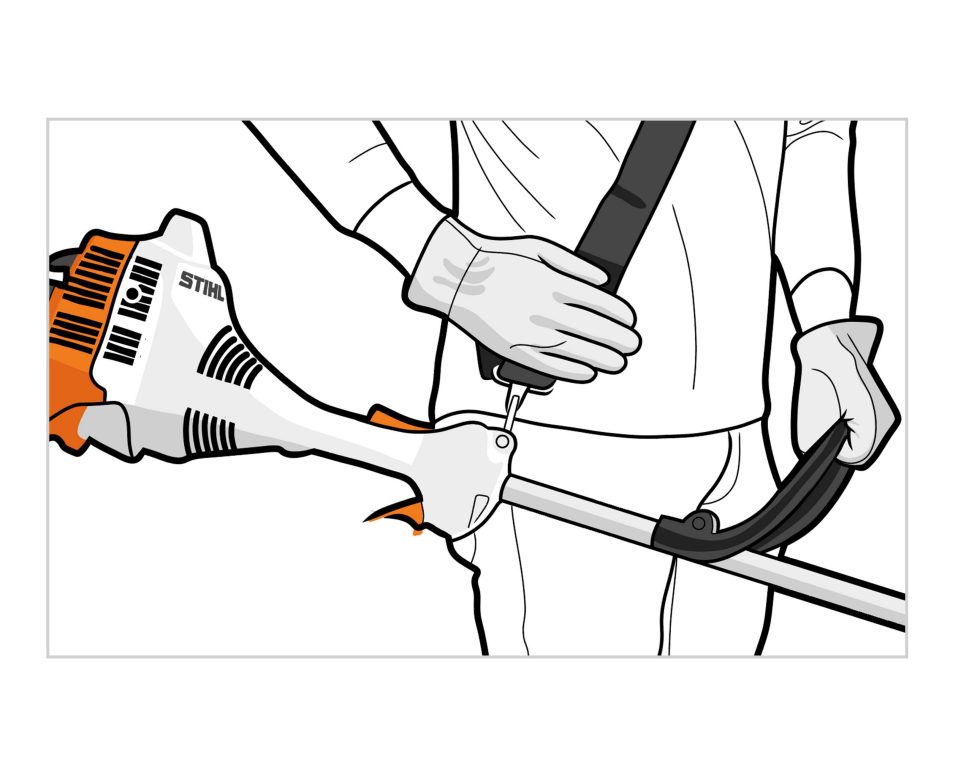
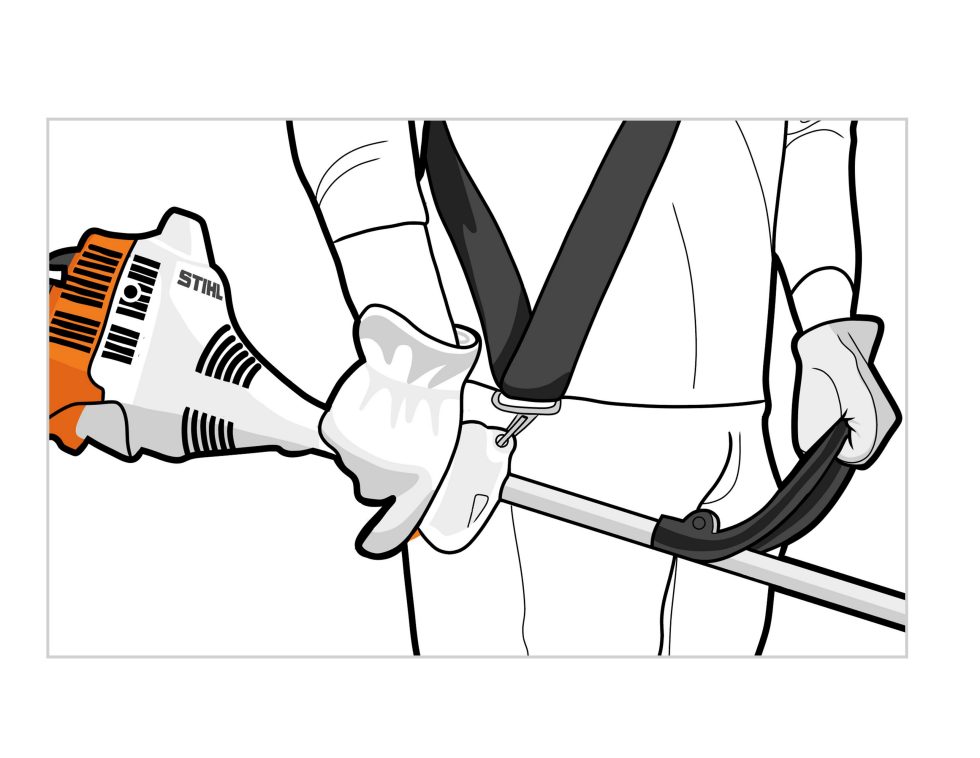
For more information specific to your model, view the product instruction manual.